
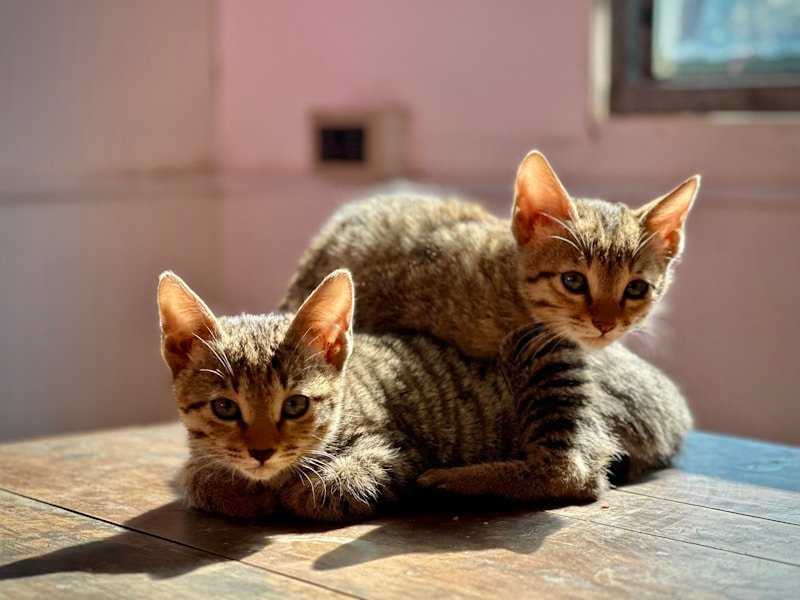
Cats have long been revered for their mysterious and independent nature. Unlike dogs, who are often eager to please, cats communicate in more subtle and nuanced ways. Their language—one that involves a mix of sounds, body language, and behaviors—may seem enigmatic to us, but it’s actually quite complex and specific. In this article, we will decode the secret language of cats, helping you better understand your feline companion.
The Sounds: Meows, Purrs, and Hissses
Cats are known for their vocalizations, and each sound they make serves a different purpose. One of the most familiar sounds is the meow, which adult cats typically use to communicate with humans. Interestingly, adult cats rarely meow to each other; they save this vocalization specifically for their human companions. A cat may meow to ask for attention, food, or even a petting session. The tone, pitch, and frequency of the meow can indicate different things. A high-pitched, rapid meow might signal excitement or a request, while a low-pitched, slow meow could indicate annoyance or impatience.
Purring is another sound that is often associated with contentment. However, cats also purr when they’re in pain or feeling anxious. This makes purring a bit more ambiguous than simply a sign of happiness. While it’s most commonly associated with relaxation, it’s also a way for cats to self-soothe or communicate distress to their owners.
Hissing and growling are signs of aggression or fear. These vocalizations serve as warnings. A cat that hisses or growls is likely trying to tell you that it feels threatened and is ready to defend itself. It’s crucial to respect a cat’s space when these sounds are made, as continuing to approach could lead to a scratch or bite.
The Tail: A Cat’s Silent Expression
A cat’s tail is a remarkably expressive body part that can convey a wide range of emotions. Understanding tail movements can help you gauge your cat’s mood more accurately.
-
Upright and quivering: If your cat holds its tail straight up and it trembles slightly, it is likely showing affection or excitement. This is often seen when a cat greets its owner after a long day.
-
Flicking or twitching: A tail that flicks back and forth rapidly usually signals that a cat is annoyed, agitated, or in an intense state of focus. This is often seen when a cat is hunting or when it feels disturbed.
-
Tucked between the legs: This position is a clear indication that a cat is scared or anxious. It can also signal submission in situations where the cat feels overwhelmed or threatened.
-
Swishing from side to side: A cat that sways its tail from side to side is usually experiencing a conflict, often internally. This could mean a cat is debating whether to attack or retreat.
The Eyes: A Window to Your Cat’s Emotions
A cat’s eyes are not just for seeing; they are a key element in their communication. The way your cat’s eyes look can tell you whether it’s relaxed, threatened, or focused on something.
-
Slow blinking: Cats communicate trust and affection through slow blinking. If your cat looks at you and slowly closes its eyes, it’s giving you a “cat kiss.” This is a sign that your feline feels safe and comfortable with you.
-
Dilated pupils: Large pupils are often a sign of excitement, fear, or surprise. If your cat’s pupils are dilated, it may be feeling threatened or highly stimulated. Conversely, if the pupils are constricted, the cat might be relaxed and calm.
-
Direct stare: When a cat stares at you intently without blinking, it can be a sign of dominance or a challenge. Some cats may use this as a way of asserting control over a space or a person.
Body Posture: Understanding Feline Body Language
Cats are extremely adept at using their bodies to express how they feel. Their posture tells you a lot about their emotional state, and it’s crucial to pay attention to these cues if you want to build a deeper understanding of your cat.
-
Arched back: If a cat arches its back and stands upright, it’s trying to appear larger in an effort to scare off a perceived threat. This posture is often accompanied by puffed-up fur and may be followed by a defensive strike if the threat gets too close.
-
Curled up: A cat that curls up into a tight ball is usually feeling secure or wanting to rest. This position is common when a cat is sleeping or lounging in a comfortable environment. It indicates that the cat feels safe enough to relax fully.
-
Stretching: When a cat stretches its front legs and extends its back, it’s both exercising and signaling relaxation. after waking up is a sign that the cat is in a content and peaceful state.
-
Belly exposure: When a cat rolls over onto its back and shows its belly, it might look like an invitation for belly rubs, but it’s often a sign of vulnerability. While some cats love belly rubs, many roll onto their backs as a defensive gesture, ready to strike if they feel threatened.
Conclusion
By learning to read the subtle signals of your cat’s body language and vocalizations, you’ll be able to deepen your bond with your feline friend. Cats may be more independent than other pets, but they are also incredibly communicative, and understanding their unique language is a rewarding experience. Whether it’s the soft purring of contentment, the twitch of an irritated tail, or the slow blink of trust, each gesture holds meaning in the world of cats. So, the next time your cat gives you a look or a sound, take a moment to pause and decipher what it’s trying to say.