
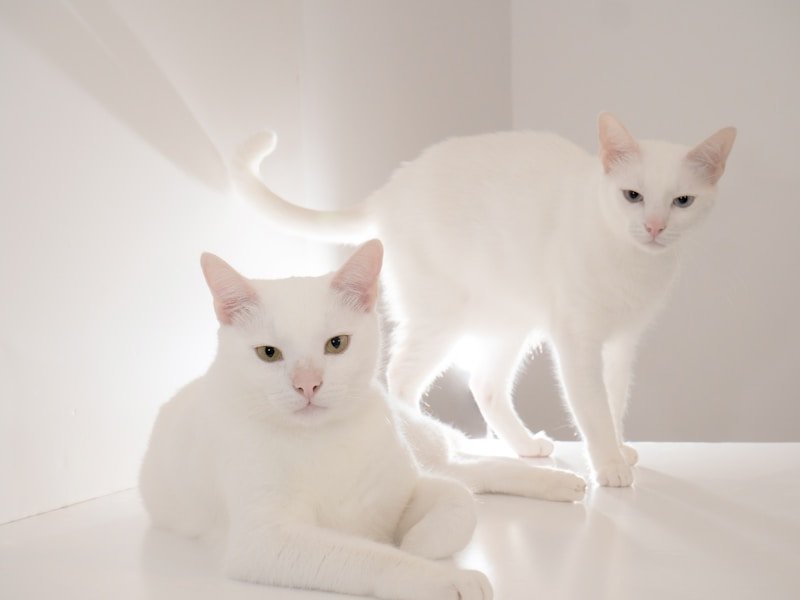
Cats have captivated humans for millennia with their mysterious, often elusive nature. From ancient Egypt, where they were revered as deities, to modern times, where they are beloved companions in millions of homes, cats continue to evoke fascination. They have an enigmatic presence that goes beyond the typical pet-owner relationship, making us wonder: What lies beneath the surface of the feline soul? Is there more to these creatures than meets the eye? This article delves into the complexities and mysteries that make cats such intriguing beings.
The Ancient Connection: Cats as Mystical Symbols
Throughout history, cats have been seen as symbols of mystery and power. In Ancient Egypts, cats were regarded as sacred animals, associated with the goddess Bastet, the protector of home and family, and the embodiment of fertility, love, and music. Egyptians believed cats had an ethereal connection to the divine, which only added to their mystique. Killing a cat, even accidentally, was punishable by death. This reverence extended to other ancient cultures as well, with the Greeks and Romans regarding cats as guardians of the home and protectors of the grain.
The symbolism of cats as mystical and independent creatures has persisted through the ages. Even today, many people view their cats as more than just pets—they are spiritual companions, guardians, and protectors of their homes. Whether it’s their stealthy, almost supernatural grace, or their ability to seem simultaneously distant and affectionate, cats continue to embody an aura of mystery that transcends time and place.
The Independent Nature of Cats: A Soul Untamed
One of the most striking characteristics of cats is their innate independence. Unlike dogs, who have been bred for cooperation and companionship with humans for thousands of years, cats were largely self-sufficient hunters before being domesticated. This independent streak is woven into the very fabric of their existence. Cats can be affectionate, but they are also perfectly content spending hours on their own.
This self-reliance has earned them a reputation for being aloof or even emotionally distant. However, this behavior may not necessarily be a sign of disinterest in their owners; rather, it may be an expression of their preference for autonomy. Cats don’t need constant attention or validation to feel secure. They have their own rhythm and often assert their independence by seeking solitude or engaging in self-soothing activities like grooming or napping.
Despite this, cats are also capable of forming deep bonds with their humans. They can show affection through purring, headbutting, or curling up in your lap. It’s a reminder that while cats may not rely on humans the way dogs do, they still possess a profound ability to connect emotionally. Understanding this balance between independence and affection is key to appreciating the complexity of the feline soul.
The Mysterious Language of Cats: A Silent Communication
A fascinating aspect of cats is their complex communication system, which relies heavily on body language, facial expressions, and subtle vocalizations. Unlike dogs, who often bark or whine to express themselves, cats tend to communicate more quietly and subtly. A flick of the tail, a twitch of the whiskers, or a shift in posture can convey a range of emotions, from curiosity to irritation, to contentment.
Cats also use their voices in unique ways. While meowing is primarily reserved for humans, it’s not something cats do in the wild. Kittens meow to their mothers, but adult cats use this vocalization to communicate with humans, signaling everything from hunger to a desire for attention. Some cats even develop a “vocabulary” specific to their owners, a set of sounds that are uniquely understood by their human companions.
The silent, often cryptic nature of a cat’s communication adds to their mystique. For cat owners, deciphering their feline companion’s signals becomes a daily puzzle, one that requires patience and attention to detail. In many ways, this quiet communication only deepens the bond between cats and their humans, as it invites a level of understanding that transcends words.
The Feline Soul: A Window to Mystery and Wonder
Despite centuries of companionship, cats remain enigmatic creatures. Their behavior often leaves us with more questions than answers, and their ability to simultaneously seem so familiar and yet so otherworldly keeps us intrigued. Whether it’s their ability to jump to seemingly impossible heights, their hypnotic gaze, or their unique personalities, cats continue to hold a special place in the human imagination.
Psychologists and animal behaviorists suggest that the mystery of the feline soul may lie in the fact that cats are creatures of contrast. They embody both the untamed wildness of their ancestors and the domesticated comfort of modern pets. This duality makes them unpredictable, fascinating, and sometimes even elusive. Their independence allows them to remain connected to a primal essence, while their ability to bond with humans reminds us that they are capable of deep emotional connections.
Ultimately, the enigma of the feline soul may be what makes cats so compelling. We may never fully understand all the layers that comprise these fascinating creatures, but perhaps that’s exactly what makes them so special. Cats invite us into a world of mystery, where love and independence coexist, and where every purr, every glance, and every silent moment is filled with deeper meaning.
In the end, the feline soul remains just that—an enigma—waiting for us to appreciate it, understand it, and perhaps, even be humbled by it.