
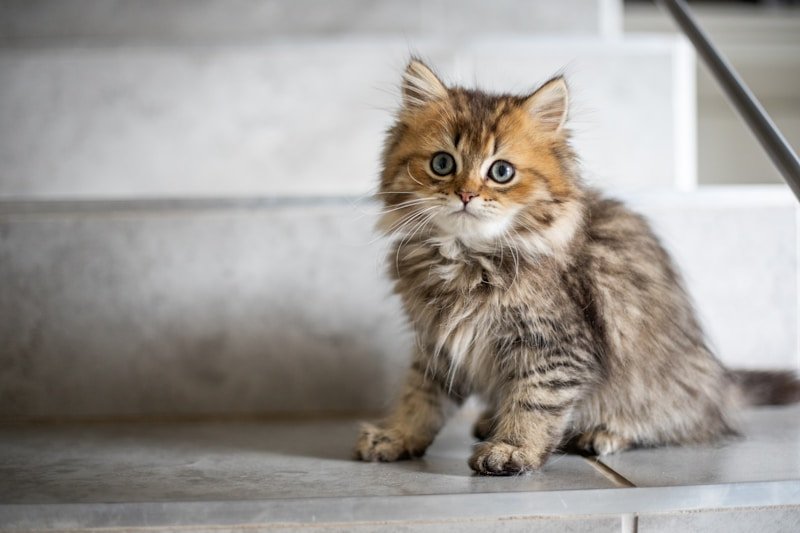
In a world where animals often show affection in their own unique ways, some pets go above and beyond to display their love and attachment to their owners. One such story is that of a cat who simply loved too much. This is a tale about a cat’s insatiable desire for attention and the relationship it formed with its human, showing how deep the bond between a pet and its owner can truly be.
The Unlikely Beginnings of a Feline Love Story
It all started when Sarah, a 30-year-old graphic designer, adopted a little kitten from the local shelter. Sarah had always loved animals but never imagined that a tiny, shy kitten would change her life in the way it did. She named her new feline companion Luna, and from the very beginning, Luna seemed to cling to Sarah in a way that was beyond the ordinary cat-owner relationship.
While many cats enjoy independent lives, Luna showed an almost obsessive need for attention. Every time Sarah would sit down at her desk to work, Luna would immediately jump up and curl up on her lap, purring so loudly it was almost as though she was trying to communicate something. If Sarah stood up to grab a coffee, Luna would follow her every step. This constant companionship, though endearing, quickly became overwhelming.
Signs of Over-Attachment
As Luna grew older, her behavior intensified. It wasn’t just about snuggling on Sarah’s lap anymore; Luna began to show signs of over-attachment that were more difficult to ignore. Whenever Sarah would leave the house, Luna would cry and claw at the door. Sometimes she would even follow Sarah to the car, desperately trying to get inside before the door slammed shut.
There were moments when Luna would “demand” attention in the most peculiar ways. If Sarah was typing on her laptop, Luna would place her paws on the keyboard, trying to nudge Sarah’s hand away, as though she was insisting on playing with her instead. Even when Sarah tried to take a break, Luna would jump up on the couch, nuzzle her face, and lick her cheeks with an intensity that left Sarah both amused and perplexed.
At first, Sarah thought Luna’s behavior was just an endearing sign of affection, but over time, it started to feel like an emotional burden. Sarah found herself becoming increasingly anxious about leaving the house, knowing that Luna’s overwhelming affection would turn into distress.
The Emotional Toll of Over-Attachment
While many people consider cats to be more independent animals, Luna’s attachment was more akin to that of a dog. It began to take a toll on Sarah’s personal life. She found it difficult to go on vacations, attend social gatherings, or even leave the house for short errands without feeling guilty about Luna’s emotional state. Luna’s behavior made it clear that she could not bear to be apart from Sarah for any significant amount of time.
As Sarah reached out to friends and family for advice, many suggested that it was a form of separation anxiety. Cats, much like dogs, can suffer from emotional distress when their owners are absent, especially if the pet has been closely bonded with them. Luna’s behavior wasn’t just about affection; it was a manifestation of her dependence on Sarah for emotional stability.
It became clear that Luna’s attachment issues weren’t something that could simply be ignored. Sarah decided to consult a veterinarians to rule out any health concerns and to seek advice on how to help Luna cope with her anxiety.
Steps Toward a Healthier Relationship
The good news was that Luna wasn’t suffering from any medical conditions; her behavior was purely psychological. The vet recommended some strategies to help Luna adjust and cope with her separation anxiety. One such method was creating a more stimulating environment at home to keep Luna occupied when Sarah was away. This included introducing puzzle feeders, cat trees, and interactive toys to keep her entertained.
Another important suggestion was gradual desensitization. Sarah started leaving the house for short periods of time, slowly increasing the duration. Luna, of course, would initially protest, but over time, she began to get used to Sarah’s absences. It was a long process, but it worked. Luna learned that Sarah would always return, and the distress associated with being left alone began to subside.
Sarah also found that incorporating more quality time into her day with Luna helped alleviate some of the cat’s anxieties. Daily play sessions, regular petting, and even some extra snuggle time before bed helped Luna feel secure and loved, reducing the frequency of her clingy behavior.
Conclusion: Love in All Its Forms
The bond between Luna and Sarah is one that is undeniably strong, but it wasn’t without its challenges. Luna’s overwhelming affection, though initially difficult to handle, ultimately brought the two closer together. Through patience, understanding, and the right strategies, Sarah learned how to manage Luna’s over-attachment in a way that allowed them both to thrive.
Luna’s story is a reminder that love, whether it comes from a pet or a person, is not always straightforward. Sometimes, love can feel overwhelming or difficult to navigate, but it is always worth the effort. For Sarah and Luna, their journey proved that with a little patience and understanding, any bond—no matter how intense—can be nurtured and made healthy.