
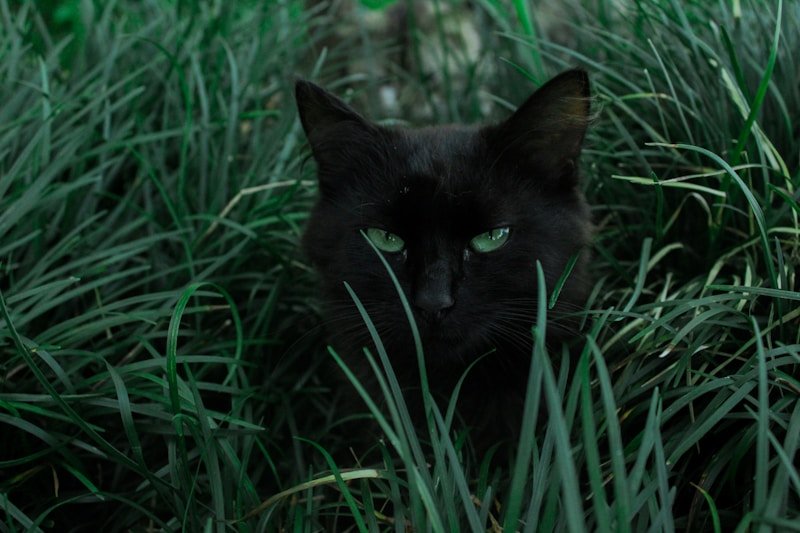
In a world where mysteries abound, few stories capture the imagination quite like the tale of a cat who could speak. Not just meow or purr in ways that we can interpret, but articulate words in a language humans could understand. It sounds like something straight out of a fantasy novel or a whimsical children’s book, but what if there were more to it? This oddity has baffled researchers, pet owners, and curious onlookers alike. So, what is the true story behind the speaking cat, and what does it mean for the way we view animal communication?
The Discovery: A Surprising Revelation
It all began in a quiet suburban neighborhood in the small town of Milbury, where a cat named Mr. Whiskers was no ordinary feline. Adopted by a family of four, Mr. Whiskers was an energetic tabby who loved to explore, chase, and occasionally cause chaos. However, one fateful day, something extraordinary happened.
While the family was sitting at dinner, a conversation took place that would change everything. As the family discussed their plans for the weekend, Mr. Whiskers, who had been lounging on the couch, suddenly interrupted with a clear, “I think we should go hiking.”
At first, the family thought they were hearing things. Was it just a coincidence? Maybe one of the family members had unintentionally mimicked the sound of a human voice? But Mr. Whiskers repeated himself, this time with more emphasis: “I want to go hiking!” The room fell silent in disbelief.
What followed was an investigation by both the family and various specialists, all attempting to understand the phenomenon. How had a cat developed the ability to speak words, and was this some kind of freak accident, or could it be a sign of something deeper?
Theories Behind Animal Communication
One of the first questions that arose in the aftermath was whether or not animals can actually understand language to a degree that allows them to mimic or produce coherent words. Cats have always been known for their intelligence and ability to understand their owners’ emotions and commands, but this was an entirely new level.
Some researchers believe that animals, especially those who live closely with humans, can absorb and mimic sounds they hear regularly. In Mr. Whiskers’ case, it is possible that he had been exposed to certain phrases, tones, and rhythms of speech so often that he subconsciously learned to mimic them. The fact that he didn’t just repeat sounds but formed sentences with context might suggest a deeper cognitive ability to associate meanings with specific sounds.
Other theorists speculate that Mr. Whiskers may have been the product of a unique combination of genetics, environment, and perhaps a twist of fate. Could it be that his brain developed in a way that allowed him to understand and even speak human language? While this theory remains speculative, it has opened the door to further research into animal cognition and communication.
The Impact on Animal Behaviors Studies
The case of Mr. Whiskers has had a significant impact on the field of animal behavior studies. Traditionally, research on animal cognition has focused on behavior, reactions to stimuli, and the ability to learn commands. Language acquisition, however, has always been considered a uniquely human trait—or at the very least, something only observed in highly intelligent species like dolphins, primates, or certain bird species.
However, Mr. Whiskers’ ability to form clear and intentional sentences has prompted researchers to re-examine their assumptions. Some believe this incident could be the breakthrough that challenges long-standing views on animal intelligence. If cats, of all animals, can somehow learn to speak, what other species may be capable of similar feats? Researchers have begun studying other cats, dogs, and even rabbits to see if there are similar cases that might have gone unnoticed.
The implications of this research are profound. If animals can communicate with humans on a deeper level, it could lead to more empathetic and responsible relationships between humans and their pets. In fact, some animal welfare advocates suggest that such discoveries could eventually pave the way for better understanding of animals’ needs and desires, improving how we care for and interact with them.
Life After the Discovery: A Cat with a Voice
In the months following the event, Mr. Whiskers became something of a local celebrity. His speaking abilities were documented by multiple news outlets, and a small group of scientists began following the cat to continue studying his speech patterns. For the family, life took on a new normal. They began paying more attention to the phrases and sounds that triggered Mr. Whiskers’ responses.
Interestingly, Mr. Whiskers didn’t seem to speak on command. His words appeared to come spontaneously, often in relation to things happening in the immediate environment. For instance, when the family was watching a movie, Mr. Whiskers would comment on the plot or express a desire for snacks during a particularly exciting scene. He never spoke about anything too abstract, though, which led many experts to believe that his ability was limited to situational speech rather than a broader grasp of language.
Still, his newfound fame didn’t come without its challenges. Despite the interest from researchers, some local residents found the cat’s speaking unsettling. Others considered it a curiosity to be shared with friends and family. For the family, however, it was just another part of their daily lives. Mr. Whiskers, now a local legend, would occasionally offer his two cents on family discussions, and life continued as usual for the family who’d discovered the cat with a voice.
Conclusion: A Tale of Wonder and Possibility
The curious case of the cat who could speak remains a mystery, one that has sparked curiosity and speculation around the world. While the true nature of Mr. Whiskers’ abilities is still unknown, it has raised important questions about the nature of animal cognition and communication. As we continue to explore the depths of animal intelligence, stories like Mr. Whiskers’ remind us that there’s still so much we don’t know about the creatures we share our homes with—and the possibility of even greater wonders waiting to be discovered.