
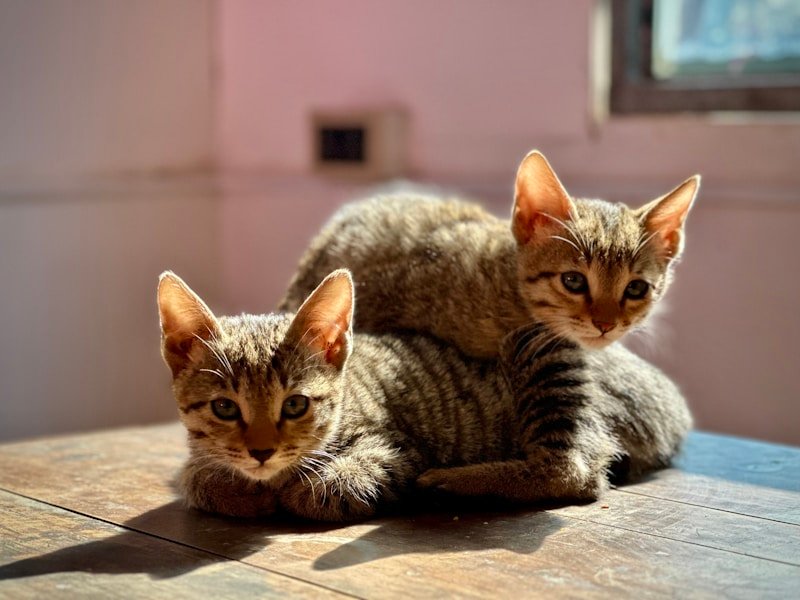
Cats are some of the most mysterious and fascinating creatures in the animal kingdom. Known for their independence and often enigmatic personalities, these furry companions can sometimes leave us puzzled as to what they’re thinking or why they behave in certain ways. The science of cat behavior delves into the psychological and physiological factors that shape the way cats interact with the world. Understanding these behaviors not only helps improve the bond between humans and their feline friends but also aids in creating a more enriching environment for cats to thrive in.
The Evolution of Cat Behavior
Cats’ behavior is deeply rooted in their evolutionary history. Domestic cats (Felis catus) are descended from wild cats that once roamed the earth around 9,000 years ago. Early domestication likely began when wild cats started to inhabit human settlements, attracted by the abundance of food sources like rodents. This initial relationship evolved over time, with cats and humans forming a more symbiotic bond.
Cats have retained many traits from their wild ancestors, such as territoriality and hunting instincts. These behaviors are hardwired into their genetic makeup. Despite being domesticated, cats often display a strong desire to mark their territory, either by rubbing against objects, scratching surfaces, or even using urine marking in extreme cases. This is a behavior inherited from their wild ancestors, who used scent to establish boundaries and communicate with other cats.
The Role of Play in Cat Behavior
One of the most intriguing aspects of cat behavior is play. While many view play as something that kittens do to pass the time, it actually serves a vital purpose in their development and socialization. In the wild, play behavior simulates hunting skills. Young kittens learn how to stalk, pounce, and catch prey through play with their littermates and mother. This behavior is not just a form of entertainment—it’s essential for survival skills in a cat’s natural environment.
Even adult cats engage in play, especially if they’re indoors and don’t have access to real prey. Play serves as a form of exercise, mental stimulation, and stress relief. For domesticated cats, it’s also a way of bonding with their human companions. Toys that mimic prey, such as feather wands or laser pointers, can trigger natural hunting instincts and provide both physical and mental enrichment for the cat.
Communication: How Cats Express Themselves
Cats have an intricate and diverse communication system, relying on both vocalizations and body language to express their emotions and needs. Understanding these signals can be key to interpreting a cat’s mood and fostering a positive relationship with them.
Vocalizations
While cats are generally more reserved than dogs, they still communicate a wide range of emotions through their vocalizations. A meow can indicate anything from a simple greeting to a request for food or attention. Some cats meow more frequently, especially breeds like Siamese, while others use it more sparingly. In contrast, purring is commonly associated with contentment and relaxation, though it can also indicate pain or distress, depending on the context.
Hissing and growling are signs of fear or aggression, often displayed when a cat feels threatened. Growls may be accompanied by other warning signs, such as an arched back, dilated pupils, or raised fur, signaling that the cat is ready to defend itself.
Body Language
Cats use their bodies to communicate just as much as they use sounds. A relaxed, upright tail often indicates confidence or curiosity, while a tail held low or tucked between the legs is a sign of fear or submission. A cat’s ears also tell a lot about its mood. Ears pointed forward show interest, while ears flattened against the head signal discomfort or anger.
Eye contact is another crucial component of feline communications. A slow blink, often referred to as a “cat kiss,” is a sign of trust and affection. On the other hand, dilated pupils or a fixed stare can indicate heightened alertness or aggression.
The Importance of Territory and Routine
Cats are creatures of habit and often feel most secure in an environment where they can establish a routine. Territory plays a significant role in a cat’s sense of security. In the wild, cats are territorial animals, and domesticated cats often exhibit the same behavior by claiming spaces like windowsills, couches, or even particular rooms.
Changes in their environment, such as moving to a new home or introducing new pets, can be stressful for cats. They may react by becoming more reclusive or, conversely, more aggressive as they feel the need to defend their territory. Providing a stable environment with consistent routines, including feeding times and play sessions, can help cats feel more secure and reduce stress-related behaviors.
Indoor cats, in particular, benefit from opportunities to explore and claim different areas of the home. Vertical spaces like cat trees or shelves can give them a sense of control over their environment. Additionally, offering various hiding spots can help a cat feel safe when it wants to retreat and rest.
Conclusion
The science of cat behavior offers valuable insights into the lives of our feline companions. By understanding the evolutionary roots, communication methods, and psychological needs of cats, we can better support their well-being and strengthen our bond with them. Whether they’re pouncing on toys, curling up in a sunbeam, or quietly watching the world from a high perch, cats are always communicating, and by learning their language, we can better understand and appreciate their complex personalities.