
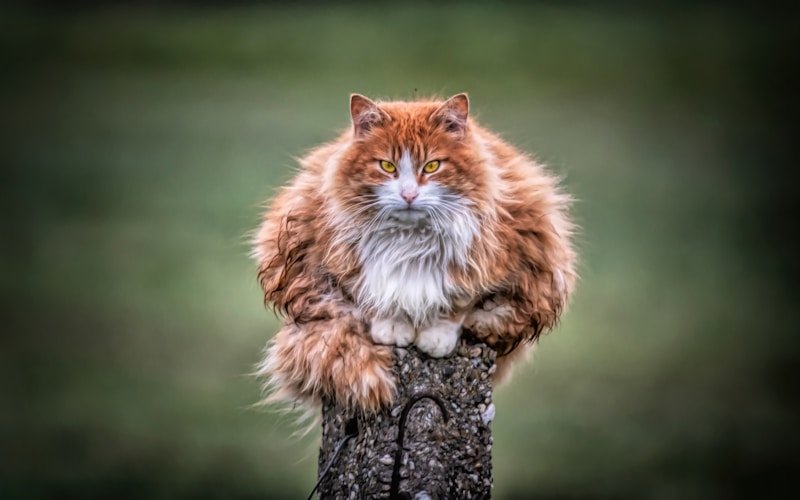
In a quiet corner of a quaint little bookstore, nestled between dusty shelves and yellowed pages, there lived a cat named Puck. A small, tabby cat with an unmistakable fondness for literature, Puck had an unusual hobby. While most cats contented themselves with chasing mice or napping in the sun, Puck had an undeniable passion for Shakespeare. This curious feline would often curl up beside the books of the Bard and seemingly lose himself in the works of one of history’s greatest playwrights.
Though many thought it to be mere coincidence, there was a certain magic about Puck’s presence in the bookstore. It seemed as if the old tomcat had a deeper understanding of Shakespeare’s words than any human could hope to achieve. His love for the playwright’s work wasn’t just superficial; it was profound and inexplicably connected to the rhythms and emotions found in the poetry.
A Feline’s Curiosity for the Bard
Puck had been a fixture in the bookstore for as long as anyone could remember. His days were spent exploring the aisles, brushing up against shelves filled with volumes of every kind. But it wasn’t until the first Shakespearean play came into his life that things started to change.
One cold autumn evening, the bookstore owner, a well-read man named Henrys, decided to stage a reading of A Midsummer Night’s Dream for the store’s patrons. As Henry read aloud, Puck, who had been lounging lazily by the window, perked up. Something about the rhythm of the language, the cadence of the lines, caught his attention. He slowly approached Henry, rubbing his head against the pages of the open book.
This behavior was curious enough for Henry to pause and chuckle. “Well, well, Puck,” he remarked. “It seems you’ve found yourself a kindred spirit in Shakespeare.”
From that moment forward, Puck would often be seen pawing at the pages of Shakespeare’s plays. His eyes would follow the lines, and sometimes, he even seemed to respond to the dialogue with a soft meow, as if in agreement or disapproval. It was as though he recognized the depth and beauty of Shakespeare’s language—an emotional response that many visitors to the bookstore couldn’t help but notice.
A Midsummer Night’s Dream: Puck’s Favorite Play
Given the cat’s namesake, it was perhaps no surprise that A Midsummer Night’s Dream became Puck’s favorite play. The mischievous, whimsical character of Puck (also known as Robin Goodfellow) mirrored many of the cat’s own traits—cunning, playful, and a little bit elusive.
Every time someone would read aloud from this comedy, Puck would dart around, as if participating in the magical world of the play. He would leap to the top of the bookshelf during the parts where the fairies danced and fluttered about, and when the characters fell into confusion, Puck would sit in the middle of the floor, observing the chaos with a look that seemed almost knowingly amused.
It became a delightful routine for bookstore patrons to bring their friends into the store and watch as Puck would listen intently to the scenes, appearing to react at just the right moments. He even seemed to develop a special fondness for the lines spoken by the character of Puck in the play, perhaps recognizing a fellow trickster.
The Magic of Shakespeare and the Feline Mind
But why Shakespeare? What was it about the Bard’s words that resonated so deeply with Puck? Some might say it was the rhythm of the language, the poetry in the prose, or even the depth of emotion embedded in the plays. Cats, after all, are known for their sensitivity to sound, and Shakespeare’s verse is carefully crafted with rhythm and musicality.
However, there was more at play than just the structure of the words. Shakespeare’s works are filled with themes of love, conflict, magic, and transformation—concepts that could easily align with the mysterious nature of a cat’s world. Cats live in a realm of their own, observing and responding to the subtleties of their environment, much like Shakespeare’s characters navigate the complexities of their lives.
Puck’s connection to the text might have gone deeper than anyone could have guessed. The magic of Shakespeare, in all its emotional and intellectual depth, might have spoken to the cat in ways that humans could never truly comprehend. Perhaps, just like the characters in the plays, Puck, too, experienced moments of wonder, mischief, and transformation that were reflected in the tales Henry read aloud.
The Legend of Puck the Cat
As time went on, word spread about the cat who loved Shakespeare. Literary enthusiasts, curious visitors, and even aspiring actors began to seek out the bookstore in hopes of encountering Puck and watching him interact with the plays. Some people even began to bring him small gifts—little tokens of appreciation for his literary enthusiasm.
In a way, Puck became the unofficial mascot of the bookstore. But more than that, he became a living testament to the magic of literature and how art, in all its forms, can resonate with the soul—whether it belongs to a human or a cat. His presence in the bookstore was a reminder that the beauty of words could transcend species and that the love of a great story had the power to bring unexpected joy to all who encountered it.
As for Puck? He continued to curl up beside Shakespeare’s works, content in his knowledge that, like the plays themselves, his love for literature was timeless.